I Love Latvia!, sermon
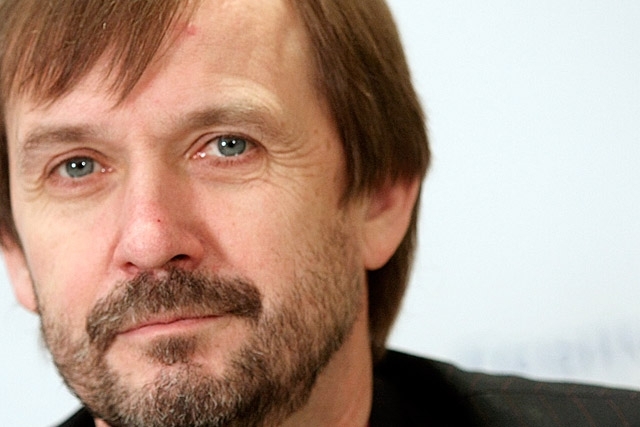
In the opinion of many observers, the most relevant speech of this year's national holiday was the sermon by Archbishop Janis Vanags of the Evangelical Lutheran Church of Latvia, delivered at the ecumenical service marking the 93rd anniversary of the proclamation of the Republic of Latvia in Riga Cathedral on November 18, 2011.
Sermon by Archbishop Janis Vanags on the 93rd anniversary of the proclamation of the Republic of Latvia
November 18, our national holiday, is the bright time in a dark autumn, when we raise flags, pin on red-white-red ribbons and decorate the wall of the Occupation Museum with a poster saying "I love Latvia!" What do we mean by that? I love the land of Latvia? I love the state of Latvia? Sometimes people emphasize this distinction between the land and the state, asking which one is to be loved. About this it must be said that loving the land of Latvia - its gentle nature, soft hills and valleys, beautiful forests, sea and rivers - is nothing new. Love for the land resounds in folk songs, in the poetry of the classics and in songs. The people were allowed to love the land of Latvia in the times of the German, Swedish, Polish and Russian tsars. Even in the Soviet years it was not forbidden. The new, unusual and even unbelievable thing is the possibility of loving the state of Latvia. Even to speak about our own state, where we can keep the Latvian language as the only state language; where Latvians can form relationships with other peoples as free people with free people; where we can elect our Saeima and can also dismiss it; where we can think, read, write and speak without fear; where we can believe and pray to God with a free conscience. In the many centuries of our history, the opportunity to love the state of Latvia has existed for only a little under fifty years. All Latvian awakenings strove toward it. The soldiers of the War of Independence fought for it. We ourselves stood on the barricades for it. Today we celebrate its 93rd birthday.
Although it is not a round anniversary, it is nevertheless significant because it occurs at an important moment in history. No less than the time of awakening 20 years ago, these are also historical turning points for Latvians. Together with Lithuanians we are the two remaining Baltic peoples. If we look into history, how many there have been! The Prussians, Galindians and Yotvingians are more often heard of. Sudavians, Dainavians and Polexians will be unfamiliar even by name to many. From the Yotvingian language a dictionary of a whole 208 words has survived. Experimental linguistics has restored the Prussian language as a functioning language. Some specialists can even communicate in it. Is that not fascinating? Yet it is hard not to think that once these were vital peoples and living languages. At a particular stage in history they became part of the domain of historians. The Galindians, for example, left this land and went out into the world. Their traces are found near Moscow and in France. It is even thought that the region of Galicia in Spain received its name from the Galindians. Today, when in the ten years since the last census Latvia's population has fallen from 2.3 to 1.8 million, when only slightly more than half of them are Latvians and half of those are older than 40, perhaps it is not panic-mongering to think that a similar stage of history has drawn near to us. Do you feel its breath on the back of your neck?
What do we do when we feel it? Part of Latvia's citizens choose something similar to euthanasia. "I may love this land," they say, "but I do not love this state. As it messes with me, so I will mess with it. If that is how it goes, then let it all go to the devil. When everything here falls apart, I will simply leave." In internet comments this choice is expressed often and emotionally. One cannot deny that a certain sense of justice resounds in it. But there is another choice as well. Last week, while visiting congregations in northern Vidzeme, I met representatives of local government, culture, schools and local business. It was refreshing to meet energetic, optimistic people who, in these circumstances, look toward the future in Latvia, do things and accomplish much for the blessing of their fellow people and for their own satisfaction. Everyone who wants Latvians to exist must understand that this is impossible not only without this land, but also without this state to love. That much in answer to the question: why do I need such independence, why do I need such a state? Perhaps other ethnic groups in Latvia have a future without the state of Latvia, but Latvians do not.
Latvia does not need euthanasia, but resuscitation and renewal.
Society expressed its desire for renewal by electing a new Saeima. There are many new faces in the people's representation, and new hopes are connected with them. Yet Jesus says: "New wine is not poured into old wineskins." New faces in themselves change nothing if the tracks remain old, if habits and principles do not change. It must also be taken into account that after new elections the same layer of officialdom remains, which is often the main decision-maker. New faces in government solve nothing by themselves. New ideas, new principles and new paths are needed. Established structures find it difficult to change. They tend to protect themselves and the existing state of affairs. Perhaps the threateningly close historical moment, with its icy breath on the back of the neck, will seem a strong enough impulse for all of us together to change something for the good. There is nowhere left to retreat.
In fact, the new is often the well-forgotten old. When people came to John the Baptist and asked what to do in order to escape the axe of the kingdom of heaven that was threateningly near, he told them ordinary, everyday things. He told tax collectors not to take from people more than had been appointed. He told soldiers, the security structures of his time, not to use power wrongly, not to oppress or rob anyone. In other words, he told every person and every order simply to fulfil their duties well and justly. To do what must be done. That is already a great step away from the axe of destruction.
But the question often arises: what, then, must be done? The more responsible a person's office is, the more important becomes the question of where he receives impulses or even instructions about what to do.
Miners have a practice of taking canaries down into the mine. Not out of sentiment, but with a very practical purpose. It turns out that these birds have very sensitive respiratory organs. If there are dangerous gases in the mine, they sense it first. When they begin to cough and choke, it is a sign that everyone is in danger and that everyone must immediately save themselves. Even those who do not yet feel anything must quickly get out of the mine. In our society, the canaries in the mine are those who are drowning, those who are most defenceless. Those who have no choice but to become migratory birds and fly away. We must look to them for signs of what to do, rather than wait for oracles somewhere in the clouds of Mount Olympus, where the powerful and godlike live their unearthly life. Nor should this be done in the spirit of saying that now we will graciously help our poor canaries in their cage. It must be done with the understanding that they are giving a sign vital to life. If they begin to suffocate, then the whole society, the whole state, is in danger. Everyone must urgently get out of such a condition, including those who themselves do not yet feel any difficulty. If one asked when the threatening historical moment drew near to us, one could say: during the time when the signs they sent remained unnoticed.
Not all of us are in a state where water is rising to our mouths, but even the more prosperous often feel neither secure nor happy. In a favourable time they bit off a larger piece than they can now digest. At one moment some of us thought: I want this much, I need that much more, and then I will be happy. When the dreamed-of thing had been obtained, it turned out that what had been lifted was too heavy to carry. To keep it, a person needs very much, and therefore fear and stress accompany him every day. This too is connected with our choices.
We chose to build our Latvia into a consumer society after the Western pattern, without realizing what problems the West itself was moving toward. Now we have many goods to consume, of course if there is money. But in the end consumer society turns the person himself into a commodity and determines his value by how much he is able to obtain and spend. A person is as significant as his competitiveness in the marathon of consumption. Those of us who accept these rules are driven by consumer society into a merciless race and stress, where status and purchasing power become identity. A person thinks: if I obtain this, if I possess that, I will deserve respect and will be able to respect myself. Then I will have realized myself and be happy. But to keep what has been obtained, a person must pour out blood, sweat and tears in the race of earning, and live in fear of a salary reduction or loss of work. Every report about consolidation and economic contraction comes like a trumpet of the end of his world, and the days pass in apocalyptic anxiety.
Without idealizing Soviet times, do you still remember what joy there was over obtaining a good book? How we went to Poetry Days? With what emotion we opened forbidden doors and entered a church? That was not entertainment; it was an oasis, refreshment for the soul, a refuge and rescue from Soviet ideology.
The ideology of consumer society also deserves no more than that we be saved from it and seek refuge. Simply step out of the race. Refuse to seek identity and respect where it tries to assign us our place. Jesus said: "Seek first the kingdom of God and His righteousness, and all these things will be added to you." Not humanitarian aid from heaven, although in real need that too, but peace of heart, contentment and a sense of security. This is what we are actually striving for even when we walk our misguided paths.
Especially those whose post and calling require them to care for the common good, but also open an easy opportunity first to take care of themselves, should become free from the dictatorship of consumer society.
Without inner freedom, the new faces are subject to the old risks, and the "old faces" are unable to change. In Christian experience there is a method of meditation in which a person sits in silence and learns to ignore all thoughts that wander around and through him. To keep attention constantly directed toward God, the person repeats a certain "sacred word". A similar exercise could be useful for gaining inner freedom from consumer ideology.
While learning in silence to ignore the thoughts and ideas with which it bombards consciousness, and while keeping attention directed toward God, repeat to yourself: "I do not need much... I do not need much..." Or perhaps even this: "I already have too much... I already have too much..." And feel how the tension relaxes, how freedom and consolation increase. Then you see that you can still help someone else or support some good cause. Latvia has the resources to satisfy everyone's needs, but not to satisfy everyone's desires, drives and ambitions.
It is often said that patriotism in Latvia has run dry. That is true, but not because people do not want to be patriots of their state. They simply lack motivation and strength. Goethe said that a person who has a goal can endure anything. The Latvian riflemen in the freedom struggles endured and accomplished the unimaginable because they had a goal: an independent Latvian state. They were patriots. In developing our state, it seems we have made mistakes with our goals.
The Bible says that God has set times and boundaries for nations not so that people would consume goods and become goods themselves, but so that they would seek God, live and move in Him, and be His offspring.
Latvia is the land God has given to us. Therefore Latvia is the most suitable place for us to discover our spiritual essence, our divine origin and calling. For that alone it is worth being a patriot of Latvia. But if a person has thrown himself into the consumption race, he may have time and strength only for the perverse form of patriotism that requires neither reason nor effort: hating people of other nationalities.
A few words should be said about that too. Patriotism does not mean considering oneself better than others or one's nation superior to other nations. Real patriotism is caring for the prosperous future of one's people and state. Jesus said that a house divided within itself cannot stand. It will perish. Someone stronger will come and take everything. Latvians have no prospects if they must fight the economic crisis, the demographic pit and also all the other nationalities who live in their land.
Yes, the past has given many reasons for bitterness, but the future requires reconciliation and common work for Latvia's good. This is written in the state's integration programs, but in order to achieve it, it must be understood to the depths of mind and heart that patriotism is not hating and rejecting people of other nationalities, but doing what serves the future of the nation, or at least not hindering others from doing it. Latvia needs reconciliation and common work for a state where the Latvian language, culture and people themselves are secure, and are united in goals with citizens of other nationalities. How to gain them as friends and co-workers for a Latvian, democratic and European Latvia is one of the most difficult, but also one of the most necessary tasks. The cooperation of Christian churches of different denominations and nationalities in Latvia is a testimony that this is possible, if only there is Christ, who unites people for a common idea.
More than 20 years ago I met a Christian missionary whose story still lives vividly in my memory. Because of his missionary activity he was imprisoned in a camp in an Asian country. The guards watched strictly to prevent any religious expression. He suffered most from not being able to pray or praise God as he was accustomed. But he found a way out. This man volunteered to clean the enormous latrine pits of the enormous prison. The stench was so terrible that the guards kept their distance. He had gained the opportunity to be alone with God. While scooping and shovelling the filthy, stinking pit, he prayed to God aloud, sang psalms and rejoiced toward heaven. Christ was able to give him consolation and joy even in a latrine pit in one of the world's most brutal prisons.
I have never been at such a low point, and probably you have not either. Our state is nowhere near such a low point. But it is good to know that Christ is able to comfort and give strength even in such circumstances. He is able to do it and does it regardless of circumstances. But the very best thing is that in a living relationship with the living Christ you sense that He always has reserves. Whatever may still lie ahead, He has reserves so that you can survive that too. We may wish that many things in our state, family or ourselves were different. That the huge loan and consolidation after consolidation had not been necessary. That so many people had not left. We may wish not to be old and ill. We may wish that our spouse or child had not died. We may wish all this, but can we achieve it? Often we cannot. And then what? Perish in bitterness? Say that in that case let everything go to the devil?
It is better to remember that Christ is able to give encouragement and peace in any circumstances. No one can take that away from you. It does not depend on other people's decisions. Christ gives it to you, and it remains yours. Not that we should not work to improve circumstances and put our state in order, but that we can do it while we ourselves have been ordered and set free by Christ. Only an enlightened and ordered person is able to act adequately in order to put something around him in order.
Christ is the Way, the Truth and the Life. He is the Truth that sets free, so that the road of our future may lead to life. On national holidays we tend to ask whether we love this land or this state.
In the fateful time of historical turning points, there are three things to love so that the nation may look to the future with hope: its land, its state and Christ.
May God bless Latvia!